
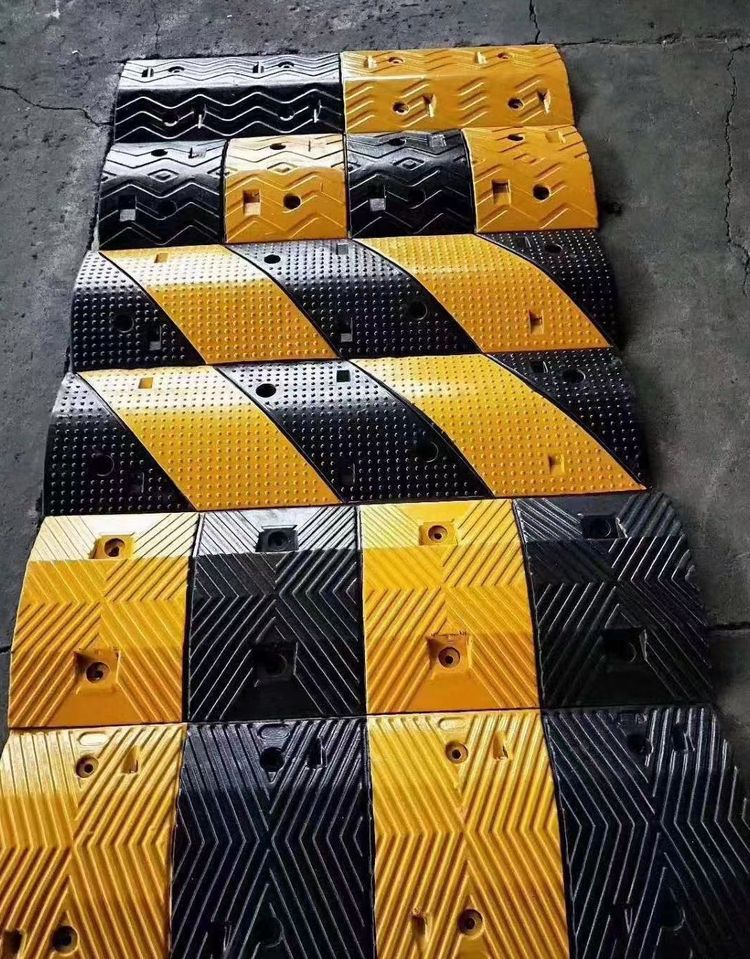
Rubber and concrete speed bumps are the two most common types of road speed reduction facilities. Their core function is to force vehicles to slow down and ensure traffic safety. However, they differ significantly in material properties, applicable scenarios, and user experience. Many road planners and managers are confused when choosing: which one is better? Actually, there is no absolute “better,” only the choice that best suits the scenario. Below is a detailed comparison of the advantages and disadvantages of both from several core dimensions to help you accurately match your needs.Which is more durable, plastic or rubber traffic cones?
Durability is one of the core considerations for selection, and the two perform significantly differently in different environments. Concrete speed bumps are made of poured concrete, making them hard and extremely resistant to pressure. They can withstand the long-term pressure of heavy vehicles such as large trucks and construction vehicles without easily deforming or breaking. In open-air environments, concrete materials excel in weather resistance, UV resistance, and resistance to high and low temperatures, with a service life of 10-15 years. They are particularly suitable for scenarios such as ports, construction sites, and main roads used by heavy trucks. However, concrete speed bumps are brittle and prone to cracking and chipping if subjected to a heavy vehicle impact. Repairing them is difficult and often requires re-pouring.How many kilograms of weighted sandbags should be placed inside a traffic cone?
Rubber speed bumps, on the other hand, are typically made of high-strength rubber with added anti-aging and UV-resistant additives, offering excellent flexibility and impact resistance. They are less prone to damage from light vehicle traffic and effectively cushion impacts, reducing damage to both the bumper and the vehicle. However, their durability is significantly affected by the environment. In areas with heavy vehicle traffic, they are easily deformed and worn; sharp objects (such as steel bars or gravel) can cause tearing. Under normal conditions, rubber speed bumps have a lifespan of approximately 5-8 years, which can be extended to 10 years with proper maintenance. They are more suitable for areas primarily used by light vehicles, such as residential areas, schools, and parking lots.How to Prevent Traffic Cones from Being Blown Over by the Wind?
The difference in deceleration effect and driving experience determines the suitability of each type for different scenarios. Cement speed bumps are hard and have sharp, raised edges, creating a strong jolt when a vehicle passes over them. This forces drivers to reduce their speed to 10-20 km/h, providing a direct and forceful deceleration warning that effectively prevents speeding. However, the intense jolt can severely impact passenger comfort, and prolonged use may damage the vehicle’s suspension and chassis. Rubber speed bumps, on the other hand, are elastic, resulting in a smoother jolt. They effectively reduce speed (keeping speeds between 15-25 km/h) while minimizing vehicle damage, offering a more comfortable driving experience and making them suitable for areas where a certain level of comfort is required.
Installation and maintenance costs are also important factors in selection. Rubber speed bumps are lightweight (approximately 10-20 kg per bump), simple and convenient to install. No complex construction is required; simply clean the ground and secure it with expansion bolts. Installation can be completed by a single person, with a short construction period and no disruption to normal traffic. Maintenance is also convenient; damaged sections can be replaced individually, resulting in low maintenance costs. Cement speed bumps require on-site formwork, pouring, and curing, making the construction process complex and time-consuming (typically requiring a 3-7 day curing period). Construction also necessitates the closure of some lanes, impacting traffic efficiency. Their initial construction cost is higher than rubber speed bumps, and repairs require removing the damaged section and re-pouring, resulting in higher maintenance costs and difficulties.
In summary, selection should be based on the specific needs of the application scenario: cement speed bumps are preferred for areas with heavy-duty vehicles and high durability requirements, such as construction sites, main roads, and ports; rubber speed bumps are more suitable for areas with primarily light-duty vehicles, prioritizing driving comfort and requiring quick installation and easy maintenance, such as residential areas, schools, parking lots, and scenic spots. Furthermore, cost budget considerations should also be taken into account. Rubber speed bumps are suitable for short-term use or temporary control areas, while cement speed bumps offer better overall cost-effectiveness for areas with long-term fixed use and high heavy-duty requirements. Scientific selection ensures both speed reduction safety and traffic efficiency while balancing operating costs.