
When driving or shopping abroad, traffic cones are everywhere—they’re placed in rows during road construction, and shopping mall parking lots use them to separate parking spaces. Many people think they look similar, both being cone-shaped and brightly painted, but there’s a big difference. Just like shoes, sneakers are suitable for running, while dress shoes are suitable for work; traffic cones also have different “uses.” Today, let’s talk about the differences between these two types of traffic cones in plain language.What’s the Ideal Distance Between Speed Bumps?
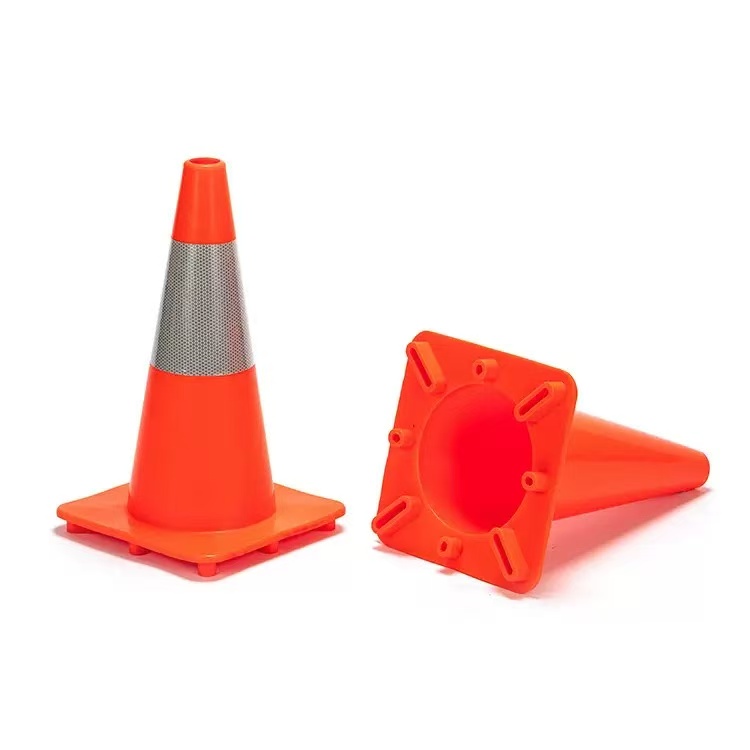
First, let’s talk about the material, which is the most crucial difference. Municipal traffic cones need to withstand wind, sun, and hard impacts, so they are mostly made of rubber or thick plastic, making them particularly durable. Think about it, municipal traffic cones are placed in the middle of the road, possibly getting scraped by cars, getting rained on, and having to withstand low temperatures in winter. If the material is poor, they’ll break quickly. Some municipal traffic cones also have a reflective film, making them particularly bright when illuminated by car headlights at night, alerting drivers to avoid them.How Far Should Speed Bumps Be Installed from Intersections?
Parking traffic cones are more “delicate,” mostly made of thin, ordinary plastic. After all, cars move slowly in parking lots; at most, shopping carts might bump into them, or pedestrians might bump into them, but they don’t need to withstand significant impact. The advantage of these cones is their lightness; they’re easy for staff to move around, and they’re inexpensive, making them suitable for large-scale deployment. However, it’s important to note that these thin plastic cones cannot be used on municipal roads; they’ll easily topple over in the wind and are easily crushed by cars.What should the spacing of traffic cones be?
The size difference is also significant. Municipal traffic cones are generally “tall and robust,” typically between 30 and 75 centimeters in height, some even taller. With heavy traffic and high speeds on roads, taller cones are more easily seen by drivers, allowing them to slow down earlier. For example, in overseas cities, 75-centimeter-high cones are often used to demarcate construction areas during road repairs; they are visible from a distance, maximizing the warning effect.
Parking traffic cones, on the other hand, are “small and compact,” mostly between 15 and 30 centimeters in height. Parking spaces are limited, and large traffic cones like those used in municipal parking lots can obstruct the driver’s view, making it difficult to see the surroundings when reversing. Shorter traffic cones are perfect for this purpose, as they don’t obstruct vision. For example, they can be used to mark parking spaces or block temporary lanes. These are the short traffic cones you’ll typically see in supermarket parking lots overseas.
Color and purpose also matter. Municipal traffic cones are primarily orange, the most conspicuous warning color, quickly attracting attention regardless of whether it’s sunny or cloudy. Their purpose is clear: to demarcate construction areas, mark road fault points, and provide temporary detour guidance. For example, on overseas highways, traffic police use orange traffic cones to create a safety zone around a vehicle that has broken down, preventing secondary accidents.
Parking lot traffic cones come in more colors, including orange, red, and blue. Different colors are generally used to distinguish different areas: red might be used to block no-entry lanes, while blue might be used to mark areas near disabled parking spaces. Their core purpose is “marking territory”—separating parking spaces, guiding vehicle routes, and blocking fire lanes. For example, parking lots in large overseas shopping malls use different colored traffic cones to separate pedestrian and vehicle lanes to avoid confusion.
Another small detail: municipal traffic cones are mostly one-piece molded with a reinforced bottom, and some even have anti-slip bases, making them less likely to be blown over by the wind when placed on the street. Parking lot traffic cones have simpler bottoms, some even hollow. When needed, they can be filled with sand for weight, and when not in use, they can be emptied and stacked for storage, saving a lot of space.
Next time you see traffic cones abroad, pay attention: tall, orange, and solid ones are likely for municipal use; short, various colors, and easily moved are generally for parking lots. Don’t overthink it when choosing traffic cones; just consider their intended use—choose municipal ones for ensuring traffic flow on the street; choose parking lot ones for maintaining order in parking lots. Choosing the right one is key to effectiveness.