
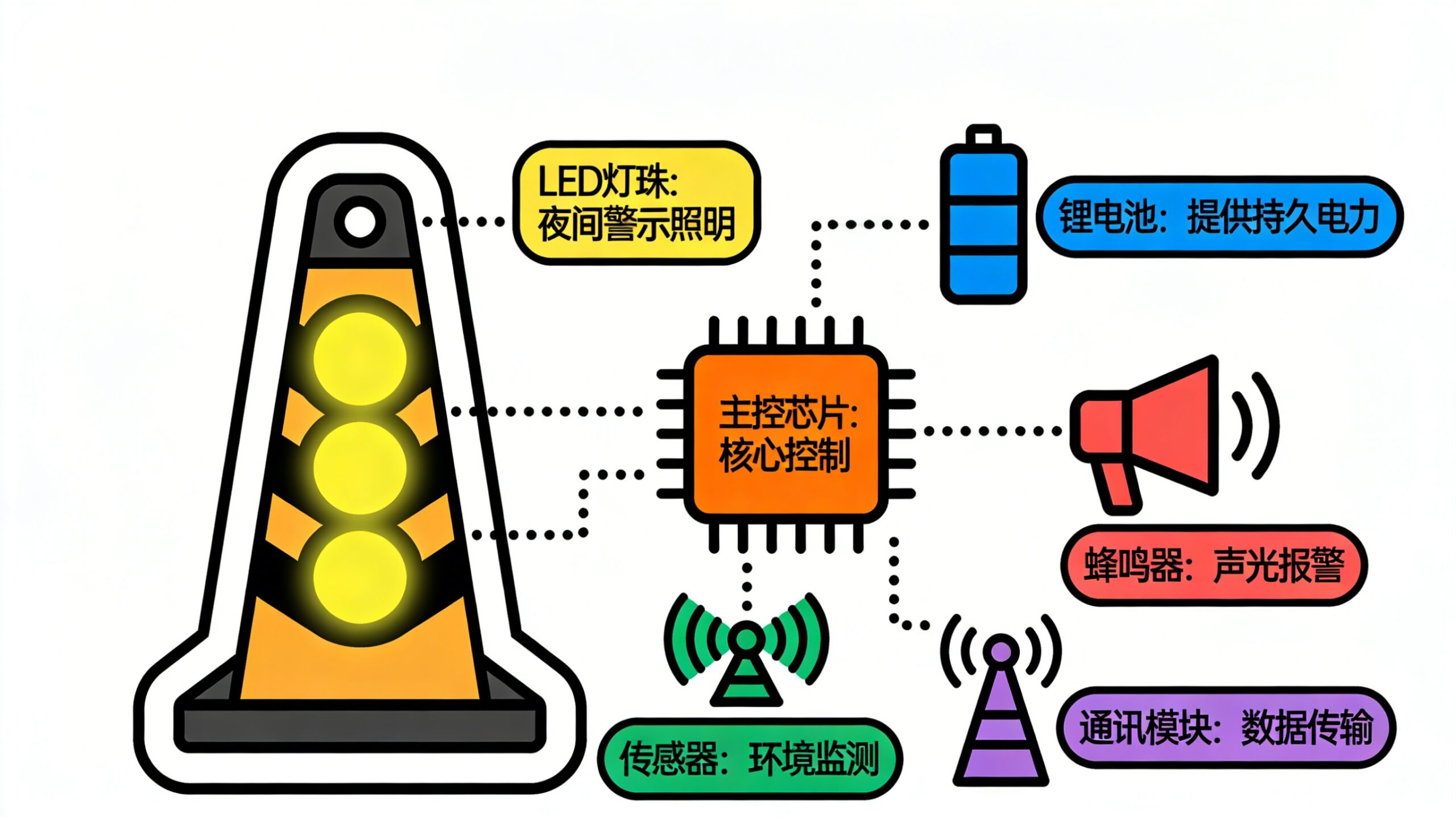
The traffic cones you usually see on the street, right? They’re just plastic cones that stand there doing nothing. The smart traffic cones we’re talking about today are the “clever devils” of the traffic cone world—they can connect to the internet, illuminate, and even speak. Don’t think it’s complicated; the principle is actually very simple, similar to the things we use with our phones or flashlights. Let me break it down for you; even a beginner can understand it in seconds.Speed bumps are broken, should you call the property management or use the maintenance fund?
First, let’s talk about the illumination principle. This thing is even simpler than your flashlight. Inside the smart traffic cone are many tiny LEDs, just like the flashlight on the back of a phone. They light up when powered on. It also has a simple control component that allows the LEDs to stay on or flash, making it visible from a distance at night. Don’t worry about plugging it in; it has a battery inside. One charge lasts a long time, and it’s waterproof, even in rain and snow. In short, it’s “battery powered + small LEDs illuminating,” similar to a child’s light-up toy, only more durable. Next, let’s talk about the sound function. Essentially, the traffic cone has a small speaker hidden inside. This speaker doesn’t just open randomly; it has pre-recorded messages, such as “Construction ahead, please slow down” or “Please be aware of traffic.” When does it sound? The traffic cone has a sensor, like an automatic door, that triggers when someone approaches. When a vehicle gets close, the sensor detects it and immediately activates the speaker, saving you the trouble of shouting from the roadside. The sound is also quite loud, easily heard even in noisy environments, much more reliable than shouting manually.How to write a monologue for the loneliest traffic cone in the world?
The core connectivity function isn’t as complicated as you might think. Inside the smart traffic cone is a component similar to a mobile phone, capable of connecting to Wi-Fi or a mobile signal, just like sending messages or watching videos on your phone. It can transmit information, such as whether it has been hit or if any vehicles have entered the area, to remote staff or navigation apps. Conversely, staff can also remotely control it, such as making it light up or sound, without having to go to the traffic cone itself. To put it simply, it’s like a traffic cone has a “cell phone,” capable of sending messages and receiving commands at any time.
These three functions combined don’t require complicated operation; they’re all handled by a small “control brain.” This component acts like the traffic cone’s command center, receiving signals from the sensors, directing the lights to illuminate, the horn to sound, and transmitting information via networked components. For example, if a car accidentally hits the traffic cone, the sensors immediately notify the “brain,” which then causes the lights to flash rapidly, the horn to sound an alarm, and simultaneously sends a “I’ve been hit” message to staff—a process faster than a human reaction.Will rubber speed bumps harden and crack in low winter temperatures?
For routine road repairs and handling traffic accidents, these smart traffic cones are far more effective than traditional ones. They don’t require constant monitoring; they automatically emit light and sound warnings, and can even “report” to people. Don’t think of it as some high-tech monster; disassembled, it’s all familiar components, simply combined into a traffic cone, transforming it from a “standalone” device into a “working and talking” intelligent machine.
Moreover, it’s incredibly durable, resistant to wind, rain, and sun, and its battery life is long enough to last a day or two on the road. Whether it’s night or foggy, the lights and horn are readily noticeable to drivers from afar, reducing the risk of accidents.