
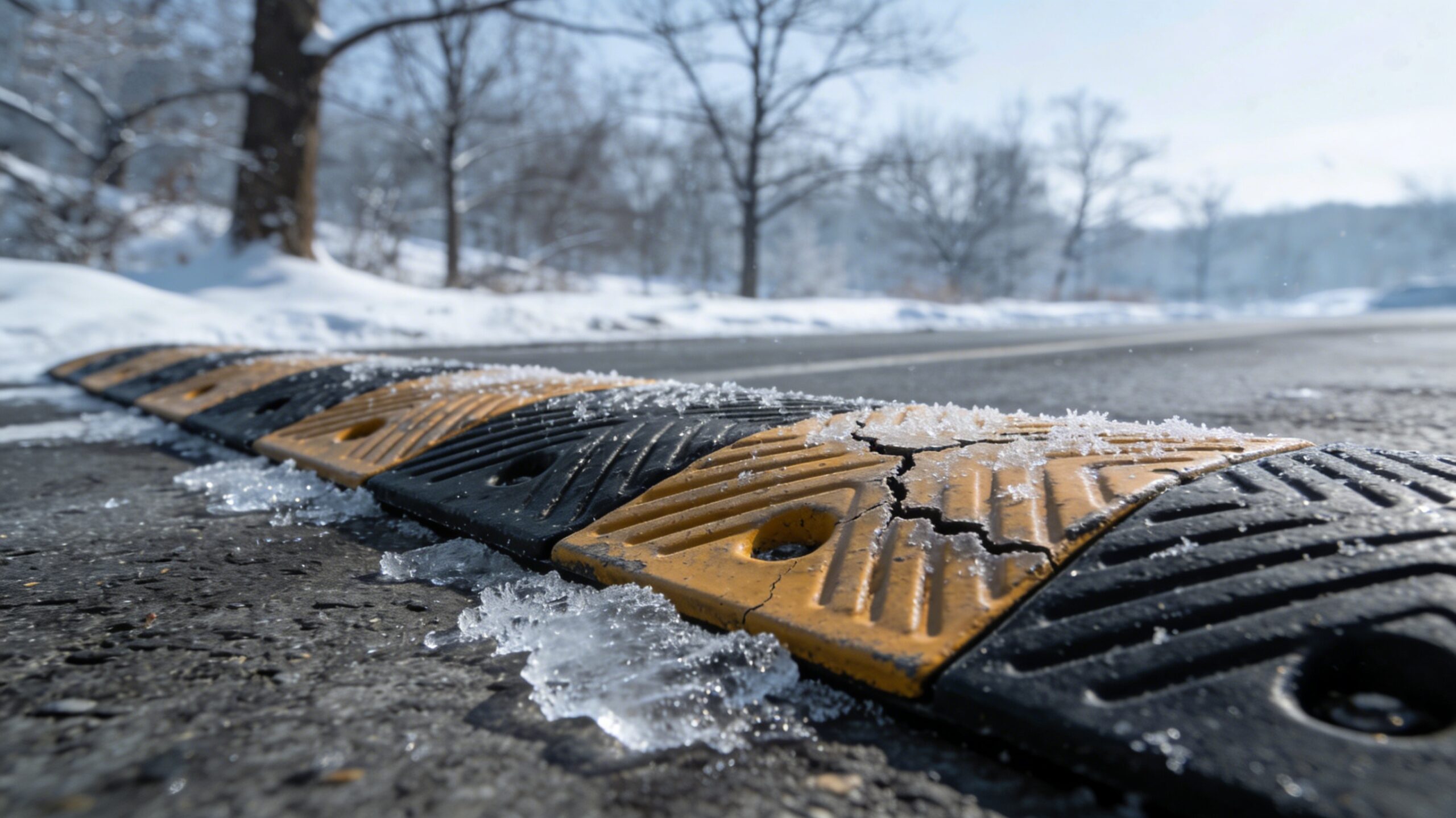
In winter, rubber speed bumps on the road seem to change completely. Many people wonder: will they harden and crack when they freeze? The answer is: yes! And the colder it gets, the more prone they are to “acting up,” becoming as brittle as instant noodles just taken out of the freezer.How to Identify Inferior Speed Bumps?
Let’s first talk about why low temperatures cause rubber speed bumps to harden. Rubber is naturally more sensitive to heat than cold. In warm weather, it’s soft and springy, bouncing back when a car runs over it, like a little spring. But in winter, when the temperature drops below zero, the molecules in the rubber “freeze,” unable to move freely, and gradually lose their elasticity, becoming hard and stiff to the touch, no longer having its previous softness.Rigid PVC Traffic Cones vs. Soft PE Traffic Cones?
After hardening, cracking becomes highly probable. Think about it, speed bumps are worn down by cars every day. Once frozen and hardened, they become much less resilient. When a car drives over it, especially a heavy truck, the hard rubber offers no cushioning, and the excessive force easily causes small cracks to appear on the surface. Initially, there might only be a few small cracks, but over time, these cracks widen, eventually breaking into several pieces.How Long Does It Take for Traffic Cones to Aging and Fade Under Sun and Wind?
Not all rubber speed bumps crack severely when frozen. High-quality speed bumps contain special antifreeze materials, much like a down jacket in winter, able to withstand low temperatures. Even at -10°C, they won’t become excessively hard, and the probability of cracking is much lower. Conversely, cheap, low-quality speed bumps use inferior materials and lack antifreeze properties; they will almost certainly crack when frozen in winter, essentially becoming “disposable.”
Another factor that makes speed bumps more prone to cracking is snow and de-icing agents. Snow on the road melts in winter and seeps into the small gaps in the speed bumps. When it freezes overnight, the ice widens these gaps. Even worse are de-icing agents; they are corrosive and damage the rubber material, making it more brittle. Speed bumps, already frozen solid, crack even faster when exposed to de-icing agents.
So how can we prevent speed bumps from cracking in winter? It’s actually quite simple. First, don’t be tempted by cheap options; choose high-quality speed bumps labeled as freeze-resistant – this is fundamental. Second, regularly inspect speed bumps in winter. If you find small cracks, repair them immediately. Don’t wait until they’ve widened before replacing them, as that’s both expensive and troublesome.
Some might ask, “What if a speed bump cracks in winter? Can I just leave it as is?” I strongly advise against it. Cracked speed bumps don’t slow down, and cars driving over them without slowing down are prone to accidents. Furthermore, broken rubber pieces could get stuck in wheels or be carried away by vehicles, hitting pedestrians or other vehicles – it’s extremely dangerous.
In short, in low winter temperatures, rubber speed bumps are indeed prone to hardening and cracking, especially inferior ones that aren’t properly protected. Paying attention, choosing the right products, and checking them regularly will ensure your speed bumps survive the winter safely, making the roads safer. After all, nobody wants to drive in winter and be jolted by bumpy speed bumps every day until their internal organs feel dislocated, right?