
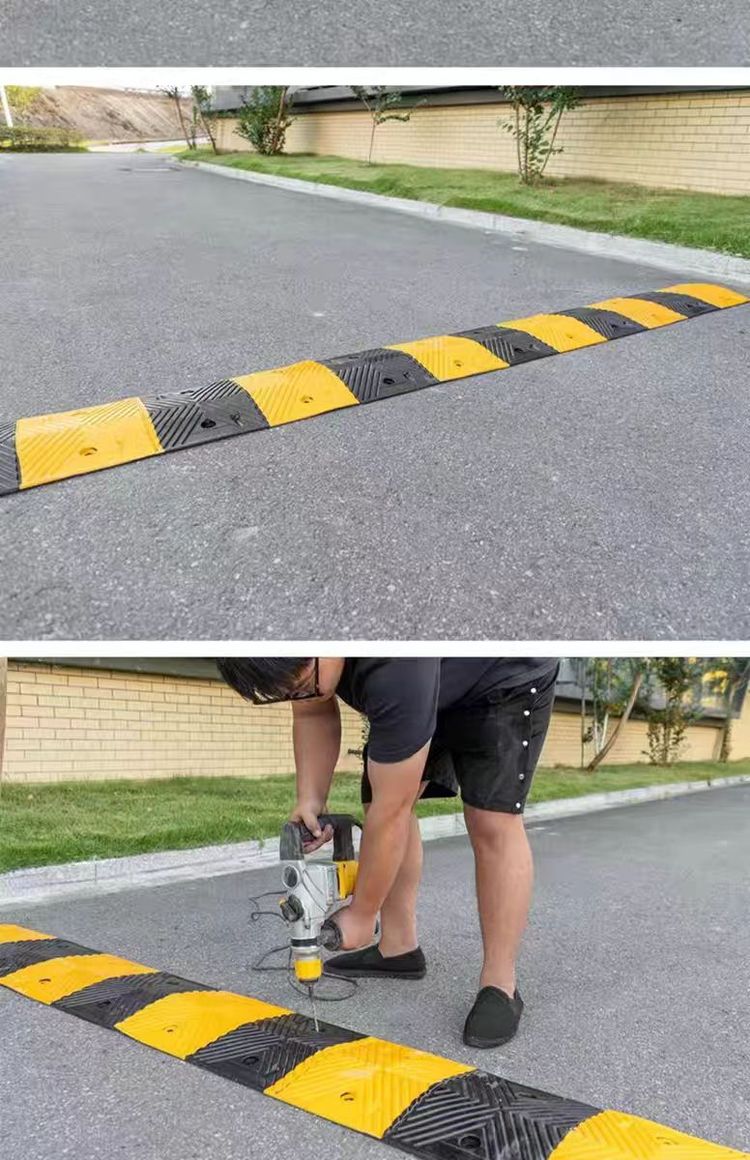
When driving, who hasn’t been “tricked” by speed bumps? Some speed bumps make the journey smooth and easy, while others feel like hidden “stumbling blocks” in the middle of the road, making your backside numb and your car feel like it’s falling apart. Actually, this isn’t a problem with your car; it’s most likely a problem with inferior speed bumps. Today, I’ll teach you a few simple tricks to distinguish between good and bad speed bumps at a glance, so you’ll never be tricked again.How Far Should Speed Bumps Be Installed from Intersections?
First, look at the appearance—this is the most intuitive step. Good speed bumps have a smooth and solid surface, and a vibrant color, usually yellow and black, making them easily visible from a distance. Inferior ones, on the other hand, have a bumpy or uneven surface, feel soft and flimsy, and have a dull, grayish color. They fade within a few days of installation, and are practically invisible in rain or at night, making them useless and increasing the risk of accidents. Also, check the edges. Good speed bumps have neat edges without burrs or cracks; inferior ones are full of burrs, and may even have cracks right after installation, meaning they’ll break down quickly.What’s the Ideal Distance Between Speed Bumps?
Then, tap on it to judge its quality by the sound. Find a small pebble or gently tap the speed bump with your hand. A good one will make a solid “thump” sound, indicating it’s sturdy. A poor-quality one will sound hollow, like it’s empty inside. While it may look thick, this type of speed bump is made of very poor materials and can’t withstand the pressure of vehicles; it might be crushed to pieces someday. Alternatively, you can press on it. A good speed bump will feel firm and unyielding when pressed; a poor one will feel soft and deform, and definitely won’t last long.The difference between installing speed bumps on asphalt and concrete roads is surprisingly significant!
Finally, check if the installation is neat and orderly. A good speed bump will be laid flat and evenly on the road surface, adhering tightly to the ground without gaps. The fixing screws on both sides will also be firmly tightened and won’t wobble. Inferior speed bumps are either crooked or have large gaps between them and the ground. They may have missing bolts or loose bolts, causing a loud clanging sound when a car drives over them and making a wobbling motion. Over time, not only will the speed bump break quickly, but it may also scratch your tires.
Finally, consider the price. Don’t be penny-wise and pound-foolish. Good speed bumps use high-quality materials and are well-made, so they won’t be cheap. If someone quotes you a price significantly lower than the market price, it’s likely a low-quality product. Many people buy cheap ones to save money, only to find they break after a few months, requiring reinstallation and incurring higher costs and inconvenience. It’s better to choose a reliable one from the start than to face the hassle later.
Identifying inferior speed bumps is actually quite simple. Remember these easy methods: check the appearance, listen to the sound, assess the hardness, check the installation, and ask about the price. Avoid those inferior products that look bad, feel soft, sound hollow, or are poorly assembled. This will ensure a smooth ride over speed bumps, preventing both jarring passengers and damage to the vehicle.