
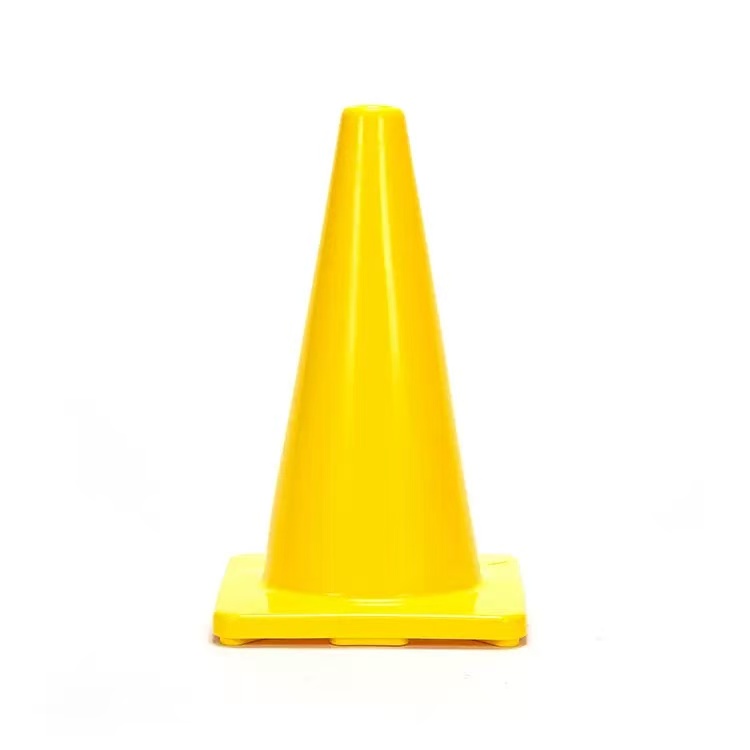
Whether it’s highway construction, parking lot maintenance, water pipe repairs in residential areas, or outdoor events, traffic cones are indispensable. They act like “temporary traffic police,” reminding people to avoid dangerous areas. However, many people struggle with choosing traffic cones: rigid PVC or soft PE? Actually, there’s no need to overthink it; just consider where you’ll be using them. Today, we’ll explain the differences between these two types of traffic cones in layman’s terms to help you choose the right one.How Long Does It Take for Traffic Cones to Aging and Fade Under Sun and Wind?
Let’s start with rigid PVC traffic cones. These cones feel hard and are quite heavy. They’re like “tough guys,” impervious to pressure and sun. They’re most commonly seen in highway construction areas. Because of the high speeds on highways, traffic cones need to be stable; if they’re blown over by the wind or easily knocked over by a car, they lose their warning function. Rigid PVC traffic cones usually have a weighted base, making them very stable on the ground and less prone to tipping over even in strong winds.Red, Yellow, Blue, and Orange Traffic Cones: The “Color Code” of Overseas Roads
However, even these “tough guys” have some drawbacks. If it’s accidentally hit by a car, it’s highly likely to break. It’s also quite heavy, making it a bit difficult to move. It’s suitable for long-term, fixed construction areas, such as highway repairs and bridge maintenance. These areas have high traffic volume and long usage times, requiring the cones to be sturdy enough to maintain their warning effect for a long time. Additionally, it’s suitable for marking parking spaces and defining traffic areas in parking lots, as it’s not easily knocked over by passing vehicles.What’s the Ideal Distance Between Speed Bumps?
Now let’s look at soft PE cones. They feel soft to the touch, somewhat like a rubber toy, and are very light to hold. They are “flexible,” meaning even if hit by a car, they won’t break; at most, they’ll be thrown around and bounce back to their original shape. They are particularly suitable for use in residential areas, near schools, or for temporary events. For example, if a sewer is being repaired in a residential area and pedestrians need to be temporarily blocked, soft cones are very convenient; they’re easy to move, and even if a child accidentally bumps into them, they won’t be injured.
The minor drawback of soft PE cones is that they are not “stable” enough. If placed in windy weather, they are easily blown over. Therefore, it’s not suitable for use on highway sides or in open construction areas. Additionally, its lifespan is slightly shorter than rigid PVC traffic cones; prolonged exposure to outdoor sun and rain can cause it to age and soften. However, its advantages lie in its affordability and lightweight nature, making it suitable for temporary use. For example, it can be easily stored away after use, such as at weekend markets or sports events, saving space.
Two more details to help you make a quicker decision. First, consider the usage period: choose rigid PVC for over 3 months; for a few days or weeks, soft PE is sufficient. Second, consider the usage environment: choose rigid cones for heavy traffic, windy conditions, or when fixed in place; choose soft cones for heavy traffic, temporary use, or frequent movement.
Choosing traffic cones is like choosing shoes: athletic shoes are suitable for running, dress shoes for work; choosing the right scenario is key. Don’t chase after expensive ones, nor think that the harder the better. Choose according to your actual needs—one that serves a warning purpose without wasting money—that’s the smartest choice. For example, many construction teams keep two types of traffic cones on hand: hard ones for long-term construction and soft ones for temporary repairs. This flexible combination is very convenient.