
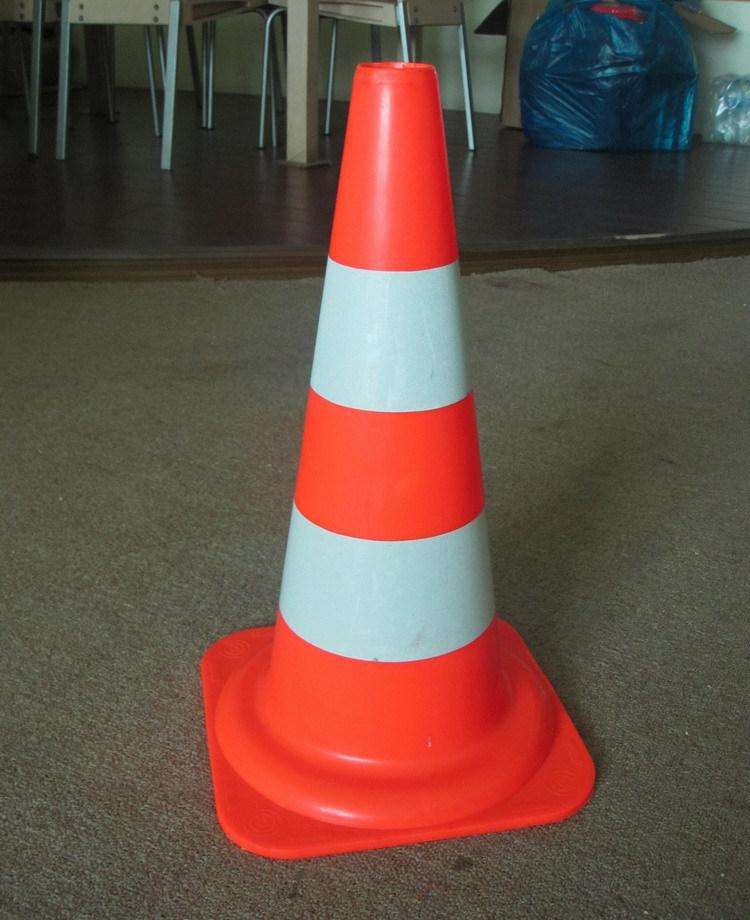
Road cones, as core warning facilities for road construction and temporary traffic control, are commonly flattened by vehicles. Simply discarding them not only increases procurement costs but also wastes resources. In fact, most flattened road cones are not irreparable. By using targeted methods based on the extent of damage, their warning function and usability can be restored. The core logic of repair is to first assess the degree of damage, then, based on the material of the road cone (mostly PE or PVC plastic), choose a method of heat repositioning + reinforcement. Below is a detailed analysis of damage assessment, repair methods for different scenarios, repair precautions, and reuse suggestions to help you efficiently repair road cones.How Far Should Speed Bumps Be Installed from Intersections?
The crucial step before repair: Assess the extent of damage to the road cone to determine if it is worth repairing. There are three categories of damage: First, minor deformation: only the outer shell of the traffic cone is dented or wrinkled, without cracks or breakage, and the base and reflective strips are intact. This type has the highest repair success rate and should be prioritized for repair. Second, moderate dents: the traffic cone shows obvious flattening deformation, accompanied by a few minor cracks (not penetrating the outer shell), and the base is basically intact. It can be reused through repair and reinforcement. Third, severe damage: the traffic cone has large-area cracks, a torn outer shell, a broken base, or completely destroyed reflective strips. Repairing this type of traffic cone cannot guarantee its warning effect and stability, so repair is not recommended; it should be replaced directly.How to Complain About Unreasonably Placed Speed Bumps in Your Residential Community
Minorly deformed traffic cones: Hot water heating and repositioning method, simple, efficient, and low-cost. This repair method is suitable for PE/PVC traffic cones with only dents in the outer shell and no cracks. The core principle is to utilize the thermoplasticity of plastic, softening the plastic by heating and repositioning it. Specific steps: First, prepare the tools, including sufficient hot water (80-90℃, no need to boil), a bucket, a rubber mallet (or a wooden mallet, to avoid scratching the outer shell), a flat, heavy object (such as a brick or steel plate), and a dry cloth. Second, soften the plastic by heating it. Place the flattened traffic cone in the bucket, pour in the prepared hot water, ensuring the hot water completely submerges the deformed area, and soak for 5-10 minutes to allow the plastic to soften fully (adjust the time according to the degree of deformation; for severe deformation, extend to 15 minutes). Third, manually and assistedly restore the shape. Wearing heat-resistant gloves, remove the traffic cone, wipe off the surface moisture with a dry cloth, hold the top of the traffic cone with both hands, and slowly stretch and press it in the opposite direction of the deformation, while gently tapping the dented area with a rubber mallet to help the outer shell return to its original shape. If there are stubborn dents, you can put it back into the hot water and repeat the process. Step 4: Cooling and Fixing. Immediately after repositioning, place a flat, heavy object on top of the traffic cone (ensuring the cone stands upright and maintains its shape). Place it in a well-ventilated, shady place to cool naturally for 2-3 hours, allowing the plastic to set and completing the repair.Which is more durable, plastic or rubber traffic cones?
Moderately Dented Traffic Cones: Heating and Repositioning + Reinforcement Repair to Improve Reusability. If the traffic cone is not only deformed but also has minor cracks (not penetrating), reinforcement steps are required in addition to repositioning to prevent the cracks from widening during use. Step 1: First, use the hot water heating repositioning method for minor deformation to restore the shape of the traffic cone and allow it to cool and set. Step 2: Crack Repair. First, clean the surface of the crack of dust and oil, and wipe it clean with a dry cloth. If the crack is small (width ≤ 2mm), a plastic repair agent matching the traffic cone material (such as PVC special repair adhesive or PE hot melt adhesive) can be used. Apply it evenly to the crack and smooth it with a scraper to ensure complete coverage of the crack. If the crack is slightly wider, after applying the repair agent, a layer of fiberglass cloth can be adhered to enhance the reinforcement effect, and then another layer of repair agent can be applied and compacted. The third step is to allow the repaired traffic cone to dry and cure. Place it in a well-ventilated area and allow it to dry according to the instructions on the repair agent (usually more than 24 hours) to ensure complete curing. The fourth step is to repair the reflective strips. If the reflective strips are damaged or detached during the repair process, replace them with new ones. Cut the new strips to match the original size and attach them to the original reflective area of the traffic cone, pressing firmly to ensure the warning function is not affected.
Repair Precautions: Avoid secondary damage and ensure safe reuse after repair. First, material compatibility: PE and PVC traffic cones are suitable for the hot water heating method. For rubber traffic cones, do not use high-temperature hot water (it easily causes the material to age and harden). Instead, use manual stretching and repositioning at room temperature + rubber-specific repair agent. Second, safe operation: Wear heat-resistant gloves when heating to avoid burns; when using the repair agent, operate in a well-ventilated environment, away from fire sources. Some repair agents have irritating odors; wear a mask if necessary. Thirdly, proper shaping is crucial. After repositioning, the cone must be allowed to cool and solidify completely. Do not move or press the cone before it has fully cooled, otherwise it may deform again. Fourthly, post-repair inspection is essential. After repair, check if the cone stands upright and properly, if the crack repair is secure, and if the reflective strips are clear. If the cone is still slightly tilted or the repair is not secure, it needs to be readjusted and repaired.
Reuse vs. Disposal Boundary: Balancing Cost and Safety. Repaired cones are only suitable for temporary warning scenarios (such as construction within residential areas or temporary parking guidance). If used in high-traffic, high-speed areas such as urban main roads and highways, even minor repairs are recommended, but replacement with new cones is preferable. The core reason is that the structural strength of the repaired cone may be reduced, making it prone to failure in strong winds or upon impact, thus failing to guarantee traffic warning safety. Furthermore, if the cost of repairing a cone exceeds 50% of the purchase price of a new cone, from a cost perspective, repair is not recommended; direct replacement is more cost-effective.
In summary, minor deformations of traffic cones after being flattened by vehicles can be quickly repaired using hot water heating to restore their shape. Moderate dents can be repaired by combining heating and restoration with reinforcement agents. Severely damaged cones should be scrapped immediately. Proper repair can effectively save procurement costs and reduce resource waste, but it must always prioritize “safe use and effective warning,” clearly defining the boundaries of reuse scenarios. For units that frequently use traffic cones (such as construction teams, property management companies, and traffic management departments), mastering these repair techniques can further improve operational efficiency.