
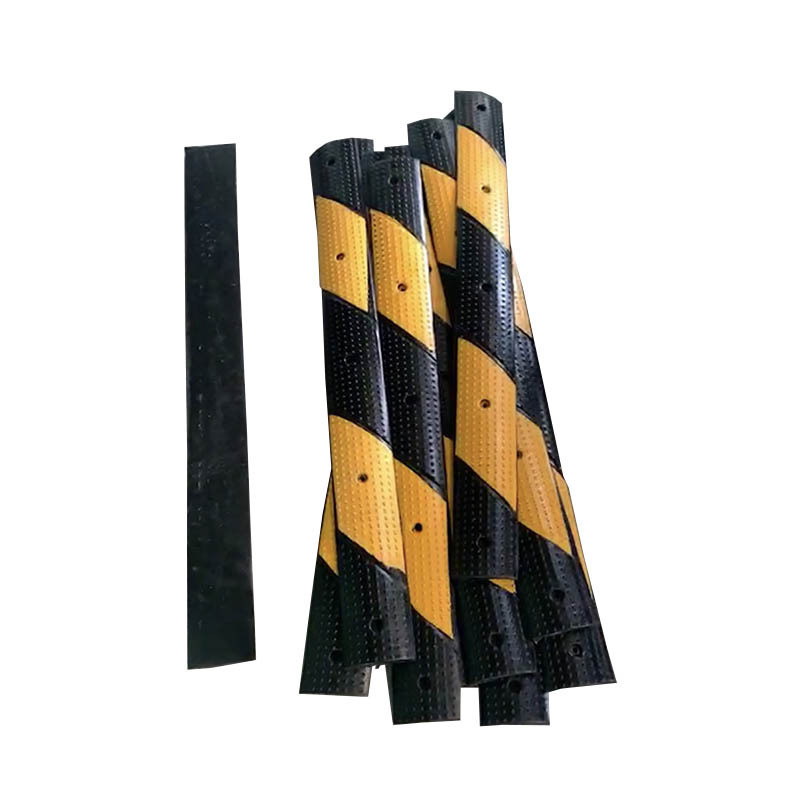
The installation location of speed bumps directly affects the safety and efficiency of traffic at intersections. In particular, improper spacing from the intersection can lead to rear-end collisions due to sudden braking, obstructed visibility, or impede emergency vehicle passage. Many road planners and property management companies arbitrarily set distances during installation due to a lack of clear standards, creating safety hazards. In fact, the installation distance of speed bumps from intersections should adhere to the core principle of “ensuring deceleration effect without affecting intersection traffic flow,” and should be determined comprehensively based on factors such as intersection type, traffic flow, and speed limits. Below is a detailed analysis of core standards, suitable spacing for different scenarios, and installation precautions to help you accurately determine the appropriate spacing.How to Complain About Unreasonably Placed Speed Bumps in Your Residential Community
From traffic regulations and engineering practice, the core reference standard for the installation distance of speed bumps from intersections is 5-30 meters. Specific values need to be adjusted according to the nature of the intersection. The logic behind this section’s placement is as follows: after a vehicle passes a speed bump, sufficient distance must be allowed to decelerate and smoothly enter the intersection. Simultaneously, the speed bump should not be too close, causing the vehicle to remain bumpy within the intersection, affecting steering or braking; conversely, too far a distance will weaken the deceleration effect, making it impossible to control the vehicle speed within a safe range before entering the intersection. Furthermore, the definition of “intersection” must be clearly defined, starting from the stop line or the edge of the pedestrian crossing, not from the corner of the intersection, to avoid unreasonable spacing due to definitional errors.How to Solve a Loud Noise When Driving Over Speed Bumps
Intersections within residential areas (such as building entrances and exits, intersections of main roads within the complex): These intersections have low speed limits (usually ≤20km/h), high pedestrian traffic but relatively low vehicle traffic. The recommended installation distance for speed bumps is 5-10 meters. Residential intersections often have blind spots with limited visibility; too far a distance will not promptly alert drivers to slow down, while too close a distance may cause vehicles to brake suddenly when avoiding pedestrians. A 5-10 meter spacing between speed bumps allows drivers to smoothly enter the intersection after crossing, while the bumpy feel reinforces the importance of slowing down, without affecting the passage of non-motorized vehicles and pedestrians within the community. When installing speed bumps, care must be taken to avoid pedestrian crossings. If there is a pedestrian crossing at the intersection, the speed bump should be placed at least 5 meters outside the crossing to prevent pedestrians from being affected by vehicle bumps.Which type of reflective traffic cone offers the best reflectivity for nighttime construction?
Intersections near schools and kindergartens: These intersections require a focus on the safety of minors, and speed limits are stricter (usually ≤15km/h). A speed bump installation distance of 10-15 meters is recommended. School intersections experience extremely high pedestrian traffic during school hours, requiring vehicles to slow down in advance to ensure sufficient reaction time to avoid pedestrians. A 10-15 meter spacing allows vehicles to slow down sufficiently before entering the intersection, while preventing sudden braking within the intersection due to insufficient distance, which could cause congestion or rear-end collisions. In addition, it is recommended to install double speed bumps at these types of intersections. The first speed bump should be 15 meters from the intersection, and the second speed bump should be 10-15 meters from the first. This stepped deceleration further reduces vehicle speed and improves safety.
At intersections of secondary arterial roads and side roads in urban areas: Traffic flow at these intersections is moderate, with speed limits typically between 30-40 km/h. The recommended installation distance for speed bumps is 15-25 meters. Compared to intersections near residential areas and schools, vehicles travel at higher speeds at these intersections, requiring a longer deceleration distance to smoothly reduce vehicles from normal speed to a safe speed at the intersection. A spacing of 15-25 meters avoids the risk of rear-end collisions due to sudden braking and ensures that vehicles enter the intersection in a stable driving state, without disrupting traffic flow. If the intersection has traffic lights, the speed bumps should be installed at least 15 meters outside the stop line to prevent vehicles from stalling or rolling back before the stop line due to bumps.
At main road intersections and emergency lane intersections: Traffic flow is heavy and speeds are high at these intersections, and emergency vehicles may also need to pass. Therefore, installing speed bumps is generally not recommended. If installation is necessary due to special circumstances (such as the presence of schools or hospitals nearby), a spacing of 25-30 meters is suggested, and flexible speed bumps should be used to minimize the impact on vehicles. At main road intersections, vehicle speeds are typically ≥40 km/h. Longer spacing allows vehicles sufficient time to decelerate, preventing sudden braking and widespread congestion. Simultaneously, a spacing of approximately 30 meters reduces interference with the passage of ambulances, fire trucks, and other emergency vehicles, ensuring their rapid passage through the intersection. Prior to installation, approval must be obtained from the traffic management department to avoid illegal installations that could affect the efficiency of main road traffic.
When installing speed bumps at intersections, three key points should be noted: First, the spacing measurement must be taken from the stop line of the intersection or the edge of the pedestrian crossing to ensure accurate calculation. Second, avoid installing speed bumps within the turning radius of the intersection to prevent vehicles from overturning when turning. Third, after installation, a speed reduction warning sign should be placed 50 meters in front of the speed bump, along with reflective markings, to remind drivers to anticipate and slow down. In addition, the condition of the speed bumps should be checked regularly. If damage or displacement is found, timely repair and adjustment should be carried out to avoid affecting the rationality of the spacing due to facility problems.
In short, there is no absolutely uniform standard for the installation distance of speed bumps at intersections. The core is to accurately adapt within a core range of 5-30 meters, taking into account the type of intersection and traffic needs. Following traffic regulations and installation principles can fully utilize the safety protection function of speed bumps while ensuring the efficiency of intersection traffic flow and avoiding safety hazards caused by improper spacing. If you are unsure about the spacing setting for a specific scenario, it is recommended to consult the local traffic management department or a professional road planning agency to ensure compliant and safe installation.