
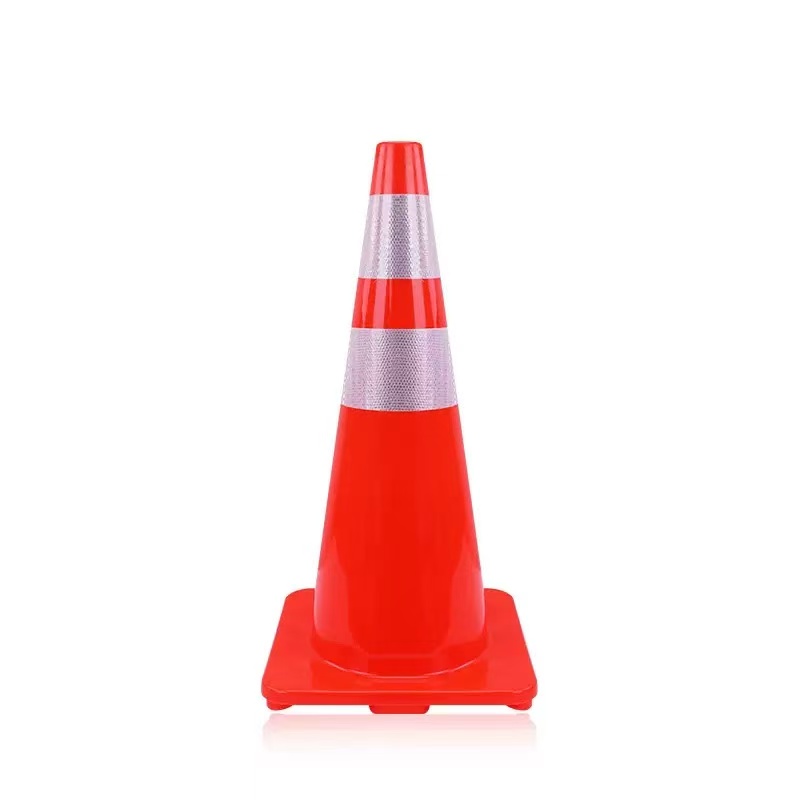
Traffic cones are a crucial outdoor traffic warning tool, and being blown over by the wind is a common problem, especially in windy conditions such as bridges, open suburban roads, and highways. A fallen cone not only loses its warning function but can also become a traffic hazard. Preventing traffic cones from being blown over involves addressing four key aspects: increasing weight to stabilize the center of gravity, optimizing placement, providing auxiliary fixation, and selecting the right materials. Targeted measures should be implemented based on the specific usage scenario, rather than relying excessively on a single method. Combining multiple measures can significantly improve wind resistance and stability.How many kilograms of weighted sandbags should be placed inside a traffic cone?
Scientifically increasing weight and stabilizing the center of gravity are fundamental methods to prevent traffic cones from being blown over. The core reason for traffic cones tipping over is a high center of gravity and insufficient weight; therefore, appropriate counterweights must be matched according to the specifications of the traffic cone. For small traffic cones (30-45cm), it is recommended to add 1-2 kg of waterproof sandbags; for medium-sized traffic cones (50-70cm), use 2.5-4 kg of sandbags; and for large traffic cones (80-100cm), increase to 6-8 kg. In windy conditions, add an additional 0.5-1 kg. Ensure the sandbags are laid flat inside the cone’s base to prevent them from shifting to one side and shifting the center of gravity. If the traffic cone does not have a sealed base, use custom-made non-slip sandbags to prevent them from falling off. Furthermore, prioritize traffic cones with larger base diameters, as a larger base provides a wider bearing area and stronger wind resistance.Which is more durable, plastic or rubber traffic cones?
Optimize placement to utilize the collective force of the cones and enhance wind resistance. Individually placed traffic cones have weak wind resistance. To enhance stability, a “matrix arrangement” or “tandem fixing” method can be used: multiple traffic cones can be arranged in a matrix such as a triangle or rhombus, with the distance between adjacent cones controlled at 1-1.5 meters to form collective resistance and reduce the wind pressure on individual cones. Alternatively, dedicated connecting straps or ropes can be used to connect cones in the same row, with the connection point below the middle of the cone to avoid increasing wind resistance. When placing the cones, ensure they face the windward direction and that the base is flush with the ground. If the ground is uneven, place a non-slip rubber pad under the base to prevent swaying in the wind.
For purchases, please add the following WhatsApp contact.
Auxiliary fixing tools can be used to adapt to extreme wind conditions. In areas where winds frequently exceed level 5, simply using weight is insufficient. Dedicated fixing accessories are recommended: secure the cone base to the ground with expansion bolts (suitable for long-term construction sections), or add anti-skid chains and suction cups to the base to enhance friction with the ground. For temporary warning scenarios, a movable weight plate can be used, placing the cone on it; the weight of the weight plate should ideally be no less than 10 kg. Furthermore, avoid placing excessively tall cones alone in open areas. If high visibility is required, choose combination cones or use them in conjunction with warning tape and barriers to distribute wind resistance.
Choosing the right cone material is crucial for improving wind resistance from the outset. For the same specifications, rubber cones weigh 0.5-1 catties less than plastic cones, have a lower center of gravity, and offer superior wind resistance, making them the preferred choice for outdoor high-wind scenarios. If choosing plastic cones, select a thicker version (wall thickness ≥ 3mm) and add additional weight. Also, avoid using cones with protruding decorations on the top, as this design increases wind resistance and makes them easily blown over. In summary, preventing traffic cones from being blown over by the wind requires a combination of factors, including “increasing weight, placement, securing, and materials,” and should be flexibly adjusted according to the wind intensity of the scene. This will ensure a stable warning effect, reduce maintenance costs, and avoid safety hazards.