
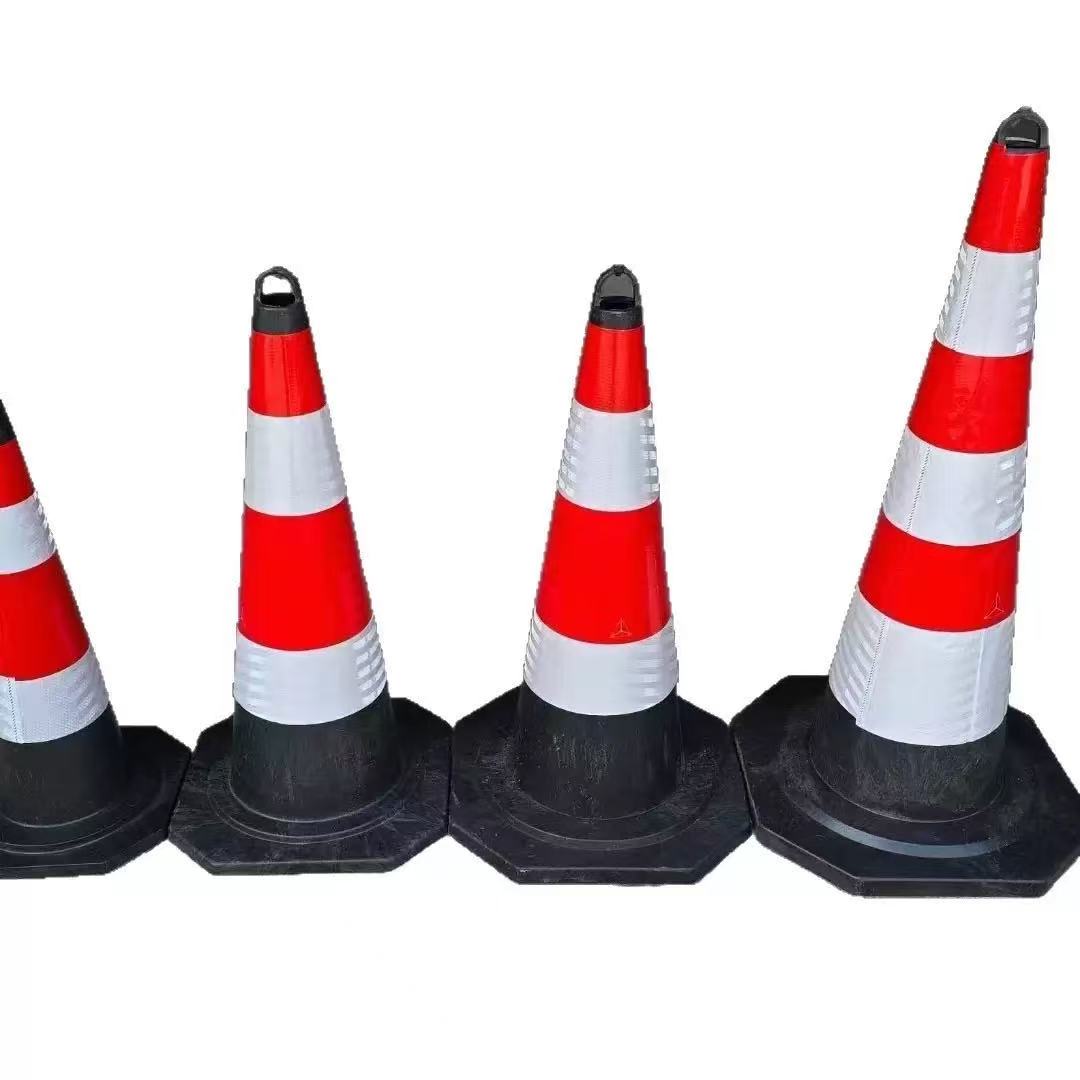
As a core tool for traffic control and construction warnings, the durability of traffic cones directly affects usage costs and warning effectiveness. Plastic and rubber traffic cones are the mainstream types on the market. Their durability cannot be simply judged as “which is better.” The key factor is the intended use scenario. Rubber traffic cones have advantages in impact resistance, aging resistance, and adaptability to complex environments, making them suitable for long-term, high-frequency outdoor use. Plastic traffic cones excel in portability and cost-effectiveness, making them suitable for short-term, temporary warning scenarios. Clearly defining your usage needs is crucial to selecting the most durable and suitable traffic cone.How many kilograms of weighted sandbags should be placed inside a traffic cone?
The durability of rubber traffic cones is primarily reflected in their impact and deformation resistance. Made of natural or recycled rubber, they possess excellent flexibility and resilience, quickly returning to their original shape after being run over or impacted by vehicles, and are less prone to damage or breakage. Real-world testing data shows that rubber traffic cones can withstand light pressure from vehicles weighing up to 5 tons without damage, while plastic traffic cones are more likely to crack or deform under the same force. Meanwhile, rubber cones offer superior anti-aging properties. Even after prolonged exposure to sunlight, rain, and extreme temperatures, they are less prone to embrittlement and fading, typically boasting a lifespan of 3-5 years. This makes them suitable for high-frequency use and complex environments such as highways, urban arterial roads, and long-term construction zones.How to Prevent Traffic Cones from Being Blown Over by the Wind?
Plastic traffic cones, on the other hand, are better suited for “light-load, short-term use” scenarios. They are mostly made of PE (polyethylene) or PP (polypropylene), making them lightweight and efficient to transport and deploy. However, they have poor flexibility and are prone to cracking and breaking under strong impacts or pressure. However, high-quality plastic traffic cones, by adding UV stabilizers and anti-aging agents, can improve their outdoor adaptability. In short-term construction, temporary traffic control in residential areas, and parking lot planning scenarios, their lifespan can reach 1-2 years, fully meeting the needs. Furthermore, plastic traffic cones have excellent waterproof properties, are not prone to mold due to moisture, and are easy to clean, making them suitable for short-term temporary indoor and outdoor warnings. However, long-term placement in high-impact, high-wear environments such as highways is not recommended.
For purchases, please add the following WhatsApp contact.
Besides the material itself, these details also affect the durability of traffic cones. For rubber traffic cones, pay attention to the purity of the rubber; higher purity means better flexibility. Avoid purchasing inferior products with excessive impurities. For plastic traffic cones, prioritize thicker models (wall thickness ≥ 3mm) with a non-slip weighted base to improve stability and reduce damage from tipping and collisions. The quality of the reflective film is crucial for both types—high-quality reflective film is wear-resistant and has a long-lasting reflective effect, while inferior reflective film is prone to peeling, reducing warning effectiveness and indirectly affecting the lifespan. Storage methods also affect durability; avoid prolonged exposure to high temperatures or excessive stacking that can cause deformation.
In summary, the core of durability for both plastic and rubber traffic cones lies in “scenario suitability”: for long-term, high-frequency outdoor use in complex environments (strong impacts, high and low temperatures), rubber traffic cones are more durable; for short-term, temporary warnings and light-load scenarios, plastic traffic cones offer better value and meet durability requirements. Don’t blindly pursue the high durability of rubber traffic cones, nor ignore the practical value of plastic traffic cones. Choosing based on the load intensity and lifespan of the usage scenario will ensure warning effectiveness while minimizing operating costs.